AI Vision Revolution for Occupational Safety
Learn how Computer Vision changes work safety monitoring, from automatic PPE detection to real-time malicious behavior analysis
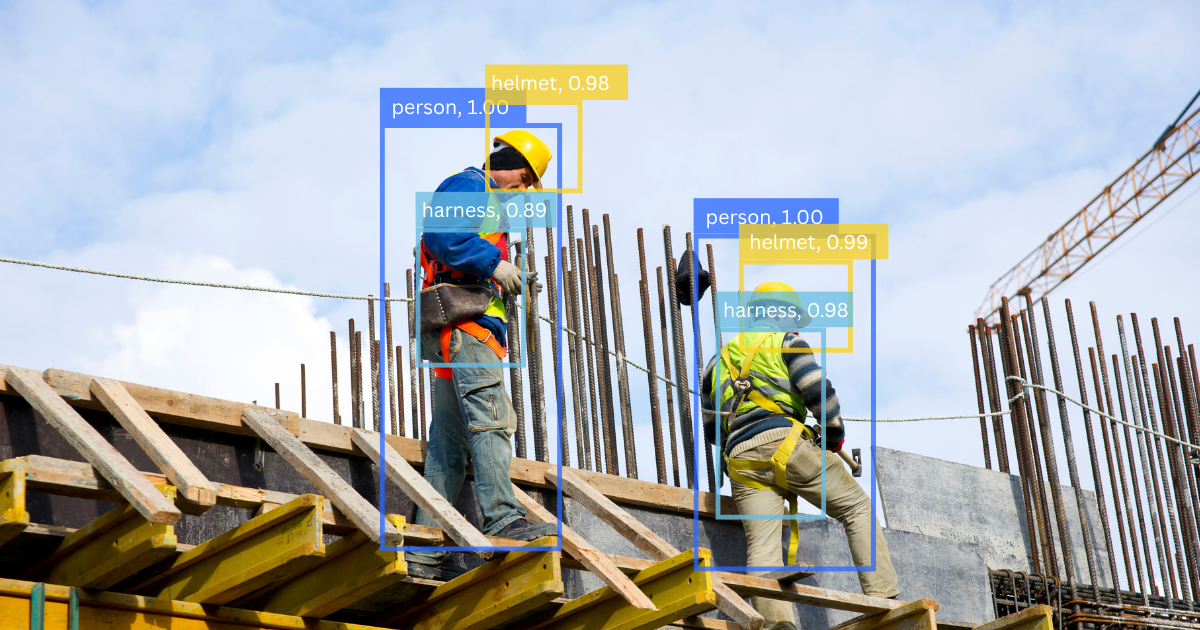
Prevent industrial accidents with AI Vision. Learn how Computer Vision changes work safety monitoring, from automatic PPE detection to real-time malicious behavior analysis.
Modern companies face increasingly complex work safety challenges. From busy factory floors to dynamic construction sites, the risk of industrial accidents continues to threaten productivity and most importantly, employee safety. Traditional work safety approaches that rely on manual surveillance and paper-based protocols need to be updated.
Dependence on this manual system creates a dangerous gap in work safety:
- Supervisors must monitor hundreds of workers simultaneously.
- Manual checklists are often overlooked or not carefully filled out.
- Detection of safety breaches is often late.
This situation not only puts the lives of workers at risk, but also results in significant financial losses for the company.
Now is the time to move on to a smarter solution. AI Vision technology or Computer Vision offers a revolutionary approach to preventing industrial accidents, supported by very effective real-time monitoring capabilities. In this article, we will discuss how this technology changes the work safety landscape and why every industry company needs to consider its implementation.
Krisis Keselamatan Kerja: Mengapa Pendekatan Manual Tidak Lagi Efektif
In most industrial facilities today, work safety management is still carried out in old ways—manual, reactive, and relying heavily on human factors. The work safety team usually relies on:
- Periodic inspection by supervisors who have limited time and monitoring coverage.
- Paper-based safety checklists that are often not carefully filled or even ignored altogether.
- Periodic safety training whose effectiveness decreases over time.
- Investigation of accidents after the incident, not proactive prevention.
This traditional approach creates some serious problems. First, the delay in the detection of safety violations which can be fatal. A supervisor is unable to monitor the entire work area simultaneously, so violations of PPE or harmful behavior are often overlooked until late.
Second, inconsistency in the application of safety standards. Human factors such as fatigue, distraction, or subjectivity in the assessment can lead to inconsistent safety standards in various shifts or work areas. Third, the lack of objective data for continuous analysis and improvement. Without accurate and real-time documentation, companies find it difficult to identify risk patterns or measure the effectiveness of their safety programs.
With more stringent regulatory pressures and increased stakeholder expectations against work safety standards, companies can no longer rely on this error-prone manual approach.
What is AI Vision for work safety?
AI Vision, or Computer Vision for work safety, is a smart system that utilizes cameras, sensors, and machine learning algorithms to monitor workplace activities in real-time. This technology is able to “see” and “understand” what is happening in the work environment, identify potential hazards, and provide warnings before an accident occurs.
In contrast to conventional surveillance systems that only record events, AI Vision can analyze each video frame to detect:
- Use of personal protective equipment (PPE) that is not appropriate or incomplete.
- Dangerous behaviors such as working at heights without safety or entering restricted areas.
- Potentially dangerous environmental conditions, such as spills of liquids or falling objects.
- Density of workers in certain areas that exceed the safe limit.
This system works by integrating several advanced technology components. High-quality cameras are placed at strategic points to provide comprehensive visual coverage. The computer vision algorithm that has been trained with thousands of images and work safety scenarios analyzes video in real-time.
Machine learning model that is continually learning and adapting to specific work environment, improves detection accuracy over time. The centralized dashboard provides full visibility to the safety team to monitor multiple locations simultaneously.
What makes AI Vision very effective is its ability to operate 24/7 without stopping, providing consistency that is difficult to achieve by manual surveillance. This system can also be integrated with existing safety infrastructure, ranging from alarm systems to emergency evacuation protocols.
Real-time Violation Detection: Monitoring of Personal Protective Equipment (PPE)
One of the most impactful AI Vision applications is the automatic monitoring of PPE usage. This system can detect whether workers wear safety helmets, protective goggles, gloves, safety shoes, and other protective equipment required in certain work areas.
This technology works by analyzing the visual cues of each individual that goes into the camera frame. Algorithms have been trained to recognize different types of PPE and can distinguish between correct and improper use. For example, the system can detect if a person is wearing a helmet but does not tighten the strap, or if the safety glasses are lifted above the head instead of covering the eye.
When a violation is detected, the system can immediately send alerts to the supervisor or directly to the worker concerned through various communication methods. Warnings can be notifications on the surveillance dashboard, messages to the Mobile Device Supervisor, or even audio announcements in the work area.
The advantages of this approach are consistency and speed of response. Unlike manual inspections that may only be carried out several times per shift, AI Vision performs continuous surveillance. Every second, the system verifies the PPE compliance of all the workers seen on the camera, making sure not a single violation is missed.
In addition, the system can also categorize the type of violation and the level of risk. High risk violations such as not wearing a helmet in an area with the risk of falling objects will receive a higher warning than minor violations.
Analysis of malicious behavior: preventing incidents before they occur
AI Vision not only detects PPE violations, but can also analyze behavior patterns that have the potential to cause accidents. This system can identify high-risk activities such as:
- Workers who move too fast in areas that require extra caution.
- A person who enters the dangerous zone without following the specified safety procedures.
- Unsafe behavior, such as lifting weights beyond capacity or using equipment in the wrong way.
- malicious interactions between workers and machinery or industrial vehicles.
This predictive ability is possible thanks to the analysis of sophisticated behavior patterns. The system learns from historical data about incidents that have occurred and identified the initial conditions that often preceded accidents. That way, AI Vision can provide early warning before a dangerous situation develops into a real accident.
For example, if the system detects a worker looking unstable while working at a height, or there is an indication of excessive fatigue from a person’s movement pattern, a warning can be sent directly for preventive intervention. This proactive approach is much more effective than investigation after the incident occurred.
Behavioral analysis also includes the detection of overcrowding or overcrowding in certain areas. This can increase the risk of accidents or hinder emergency evacuation. The system can automatically set up access to the area or provide a warning for workers’ redistribution.
Malicious Area Monitoring: Auto Access Restriction
Certain areas in industrial facilities have a higher level of risk and require strict access restrictions. AI Vision is able to carry out continuous monitoring of these dangerous zones, ensuring only authorized personnel can access them.
This system can be configured to recognize individuals based on identity cards, uniforms, or even facial recognition for certain personnel. When a person without authorization approaches or enters a restricted area, the system will immediately give a warning and can activate the automatic security protocol.
This technology is especially useful for areas such as control rooms that contain hazardous chemicals, high radiation zones, extreme temperature areas, or locations with heavy machinery operating. Automatic monitoring ensures safety protocols are always adhered to, even when the supervisor is not in the area.
In addition, the system can integrate data from various sensors to provide a more complete context. For example, combining visual detection with data from gas sensors, temperature monitors, or vibration detectors to provide a more accurate early warning of dangerous conditions.
Real benefits: ROI and accident rate reduction
The application of AI Vision for work safety provides a measurable return on investment (ROI) from various aspects. First and foremost is a significant reduction in the rate of work accidents. With real-time detection and proactive prevention capabilities, companies that implement this system report a drastic decline in incident rates.
From a financial perspective, the reduction of work accidents has a direct impact on savings in compensation costs, medical costs, and potential regulatory fines. More importantly, companies can avoid reputation losses and operational disruptions that often accompany serious work accidents.
Increased productivity can also be another advantage. When workers feel more secure and believe that their work environment is monitored with a reliable system, their stress and anxiety levels are reduced. This is positively correlated with productivity and job satisfaction.
AI Vision also provides useful analytical data that can be utilized for continuous improvement. The data collected by the system provides insight into risk-prone points, recurring patterns of violations, and the effectiveness of safety training programs. Management can use this data to make more appropriate decisions regarding resource allocation and improvement priorities.
Compliance with work safety regulations has also become easier with comprehensive automated documentation. The system provides a detailed audit trail of all safety activities, which are of great value during regulatory inspections or internal investigations.
Cross-Industrial Implementation: Manufacturing, Construction, and Mining
AI Vision for Occupational Safety has shown significant versatility in various industrial sectors, each of which has unique challenges and requirements.
In the manufacturing sector, the main focus is on the safety of interaction between workers and machines. AI Vision can monitor safe working distances, ensure engine protection protocols are adhered to, and detect potential pinched points or impeded hazards. The system can also integrate with production line control for automatic disconnection if unsafe conditions are detected.
The construction industry benefited greatly from fall protection monitoring and crane safety. The system can verify that workers who work at heights use seat belts correctly, monitor the load limits on the lifting equipment, and ensure prohibited zones around the operation of heavy equipment are adhered to.
The mining sector, with extreme environmental hazards, uses AI Vision for monitoring gas detection compliance, evacuation route management, and vehicle collision prevention in underground operations. The ability of the system to operate in conditions of low visibility and a thick dusty environment becomes very valuable.
Each industry can also adjust the detection parameters according to their specific hazards and regulatory requirements. This flexibility allows one technology platform to provide value in a variety of industrial applications.
Implementation Roadmap: Starting a Digital Safety Transformation
Implementing AI Vision for work safety is a journey that requires strategic planning and a systematic approach. The first step that needs to be taken is a comprehensive risk assessment to identify areas with the highest priority and the greatest potential return on investment (ROI).
The initial stage of implementation usually starts with a pilot project in a limited area with a clearly defined use case. This allows the organization to understand the capabilities and limitations of the system, as well as make adjustments before a wider implementation.
Aspects of change management are crucial in the successful implementation. Workers need to understand that this technology is not for supervision or punishment, but for protection and improvement of safety. Effective training and communication will ensure smooth adoption and support from the entire organization.
Integration with existing safety management systems and protocols also needs to be carefully planned. AI Vision must complement, not replace existing safety measures and procedures.
Monitoring and continuous improvement are key to long-term success. Regular assessment of system performance, false positive rates, and user feedback will enable continuous optimization and expansion of capabilities.
With the right approach, AI Vision can transform work safety culture from reactive to proactive, from manual to intelligent, and from inconsistent to reliable. Investing in this technology is not just about compliance or risk mitigation, but about creating a workplace that is completely safe and productive for all.