The development of optical cables for fast networks: the future of digital connectivity
In today’s digital era, the need for fast and stable internet connections is increasing. From high-resolution video streaming to cloud technology and Internet of Things (IoT), it all relies on high-speed networks. One of the main factors that enable high internet speed is the optical cable.
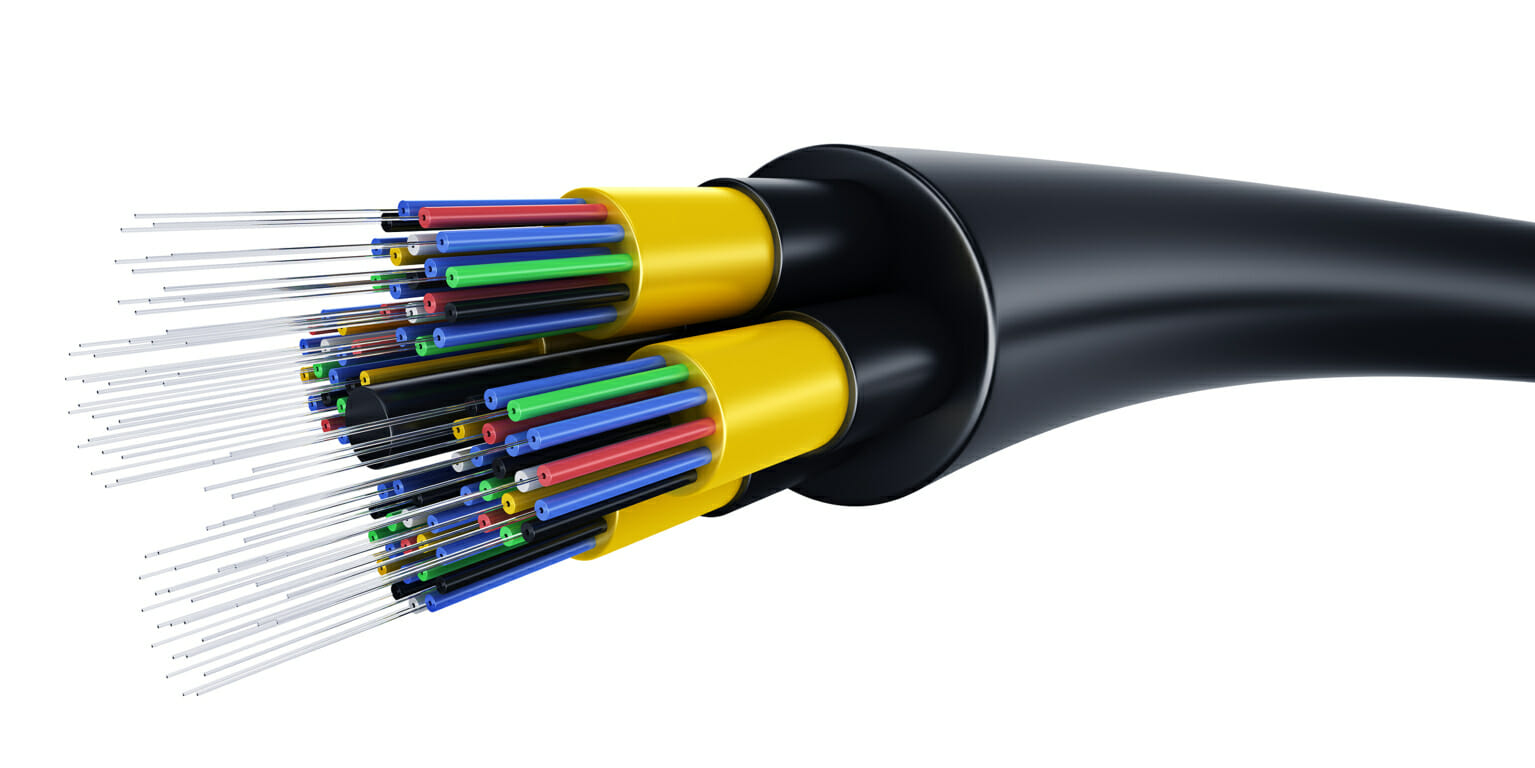
How is the development of optical cable technology from time to time? What are the latest innovations that drive the network faster and more reliable? Let’s go deeper!
What is an optical cable?
Optical cable, or optical fiber, is a data transmission medium that uses light to send information. Compared to conventional copper wires, optical cables have advantages in speed, capacity, and resistance to electromagnetic interference.
How do optical cables work?
The optical cable consists of a very thin glass or plastic core, which allows light to propagate in it with the principle of internal total reflection. The data is converted into a light signal and sent via cable at high speed, making it the technology of choice for modern networks.
Evolution and development of optical cable
1. Early generation optical cable
Optical cable technology was first developed in the 1970s. At that time, optical fiber was used for long-distance communication at a limited speed compared to today’s technology. Even so, optical cables have shown advantages over copper cables in terms of capacity and resistance to interference.
2. Development of high-capacity optical cable
As the demand for bandwidth increases, the researchers began to develop optical cables with greater capacity. Innovation in Dense Wavelength-Division Multiplexing (DWDM) enables the delivery of multiple data in one optical fiber using different wavelengths of light. This technology significantly increases the data transmission capacity.
3. Underwater optical cable for global connection
One of the main uses of optical cable is for global internet connection. Underwater optical cable connects various continents, allowing data communication between countries with very low latency. To date, there are thousands of kilometers of underwater optical cables that support global internet infrastructure.
4. Fiber to the Home (FTTH) and 5G
Fiber to the Home (FTTH) technology allows homes and businesses to get high-speed internet connections directly from service providers. With the increasing 5G network, optical cable plays an important role in connecting base stations to ensure high speed and low latency.
Latest innovations in optical cable
1. Optical cable with super large capacity
Scientists continue to develop optical fiber with a larger capacity. One of the latest innovations is the use of hollow-core fiber, which allows light to propagate faster than conventional optical fibers, thereby reducing latency significantly.
2. Nanotechnology Optical Cable
Research in the field of nanotechnology has produced new materials for optical cables that are more durable, flexible, and have better light conductivity. This allows the optical cable to last longer with higher energy efficiency.
3. Optical cable with high security
Data security is a major concern in modern communication. The latest optical cable is equipped with Quantum Encryption technology, which makes data tapping almost impossible. This is very important for the banking, government, and military communications industries.
4. Use of AI in optical cable maintenance
Artificial Intelligence (AI) is now used to monitor and analyze optical cable performance in real-time. This technology enables the prediction of damage and preventive maintenance, thereby increasing the efficiency and reliability of the network.
the benefits of optical cables for fast networks
1. High speed
Optical cable is capable of transmitting data at speeds up to terabit per second (TBPS), much faster than copper cables.
2. Low latency
Because it uses light as a transmission medium, optical cable has much lower latency than other technologies, enabling better real-time communication.
3. Larger capacity
DWDM technology allows optical cable to transmit a lot of data at one time, increasing network capacity significantly.
4. Resistance to electromagnetic interference
Unlike copper cables, optical cables are not affected by electromagnetic interference, making them more stable in data transmission.
5. Energy Efficiency
Optical cable requires lower power than copper cable to transmit data, making it more energy efficient.
Challenges in Optical Cable Development
Despite offering many advantages, there are several challenges in optical cable implementation:
– High installation costs: optical fiber infrastructure requires large investments for installation and maintenance.
– Material fragility: Optical cables tend to be more fragile than copper wires and require special protection.
– Limited range: Although fast, the optical cable has limitations in terms of distance before the signal must be reinstated.
Future optical cable
With the continued development of digital technology, the role of optical cables will be more vital. Some of the trends we can expect in the next few years include:
– Photon-based optical fiber for ultra-fast communication.
– Improved security with quantum encryption.
– Integration with 6G networks for more sophisticated connections.
– Flexible optical cable for wearable and IoT devices.
Conclusion
Optical cables have undergone rapid development, from early technology to the latest innovations that allow the network to be faster and more reliable. With widespread adoption in a wide range of industries, optical cables will continue to be the backbone of digital infrastructure in the future.
Along with the advancement of technology, it is not surprising that optical cables will continue to grow with greater capacity, higher speed, and better security. So, are we ready to face the future of faster connectivity?